A fear of heights seems like quite a rational phobia – who hasn’t at some point felt apprehensive while walking along a cliff path? However, acrophobia (an intense fear of heights) can cause feelings of panic and extreme anxiety, leading to sufferers avoiding everyday activities.
Here’s how solution focused hypnotherapy helped one of my clients overcome their fear of heights – with wonderful, life-enhancing results.
What is acrophobia?
Let’s be honest – most of us would swerve the offer of going bungee jumping. It’s a natural instinct to avoid a potentially dangerous situation, and a lot of people feel nervous or even nauseous at the thought of standing on the edge of a tall cliff. As with most phobias, the fear of heights crosses a line when it becomes debilitating.
Acrophobia, the fear of heights, causes physical symptoms such as panic attacks, with difficulty breathing, dizziness and a tight chest. It’s a truly horrible feeling, and one that prevents acrophobics from technically safe, everyday activities – climbing the loft ladder for example, or visiting a friend who lives in a top-floor flat.
A quick note about terminology. Acrophobia is not the same thing as vertigo. The term “vertigo” is often used incorrectly to describe a fear of heights, but it’s actually an extreme spinning sensation often caused by an inner-ear problem or infection. However, because a vertigo attack can be caused by anxiety, there could be a link in some individual cases.
How does a fear of heights affect us?
The symptoms of acrophobia are unpleasant and unsettling. You could experience:
- Chest pain or tightness, even at the thought of high places
- Dizziness or feeling sick, shakiness
- Feeling unbalanced
- Panicking at the thought of having to go near a high place, and trying to avoid any heights
- Feeling fearful of being trapped in a high place (acrophobia is not the same as agoraphobia – they’re simply similar-sounding words! Agoraphobia is the fear of being trapped in a situation with no escape, so again, there can be a link)
- Experiencing anxiety at the thought of having to face heights in the future
This can become life limiting: you might not take a job because your new office is on the fourth floor or cancel a hospital appointment for the same reason. You might start to avoid certain places, limiting where you choose to visit, holiday or even live.
Why do people develop a fear of heights? It can be genetic or as a result of seeing a family member exhibiting fear when you were young. It could be due to a trauma, an accident or a negative incident that your brain now associates with heights (maybe you vomited as a child in a 12th storey hotel room and came to link the two events).
How does hypnotherapy help overcome a fear of heights?
I recently helped a client overcome a fear of heights using hypnotherapy techniques. His goal was simply to see more beautiful places. He recognised that his acrophobia was preventing him from experiencing his travels to the full, so he approached me for help.
His fear of heights went back to his student days, when he’d had a panic attack on a mountain pass. This lead to a lifelong fear of heights that he realised was holding him back.
We used the Three Rs: Relaxation, Rewind and Reframe. These are hypnotherapy techniques that use deep relaxation to treat phobias. The first session is spent discussing the phobia and experiencing deep relaxation, for the first time in this case.
We then progressed to the Rewind stage. This was originally developed help patients with PTSD (post-traumatic stress disorder) overcome traumatic memories. In a deeply relaxed hypnosis state, I asked my client to go to a safe and happy place in his mind and asked him to picture a television screen. I then asked him to watch himself watching the screen, where his traumatic student walking trip was playing. This creates a mental dissociation from the negative experience. “Rewinding” and “fast forwarding” the trauma increases this dissociation.
The next phase is to Reframe the phobia, which involves creating a false memory. We talked about my client’s goal, which was to see the beautiful views for himself on his forthcoming holiday. We created an ideal scenario of him having a lovely time at the top of a mountain, enjoying the spectacular scenery. We actually did multiple Reframes in this case, planting the scenario in his mind while his brain was in a receptive state. Under hypnosis, the brain has no idea whether a scenario is a genuine or planted memory and so just accepts it as real.
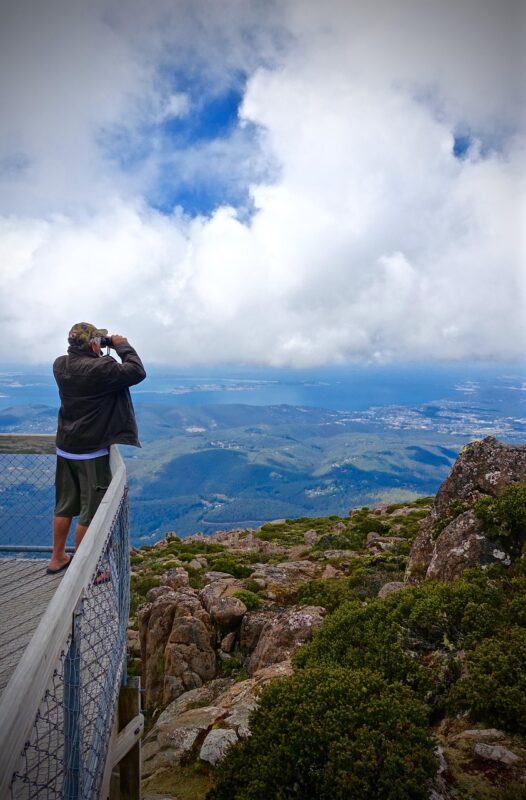
We can add a fourth R here – the results. My client went on his holiday, and even sent me photos of the views from the top! He explained that while he didn’t exactly love the experience, he actually did it, and he’s even planned another holiday involving (higher) heights for later in the year. That’s quite the achievement!
Hypnotherapy for acrophobia
Do you have a fear of heights that you feel is holding you back? As you’ve just read, hypnotherapy techniques are an effective way to help you overcome your acrophobia. If you’d like to move onwards – and upwards – contact me for a confidential chat.