
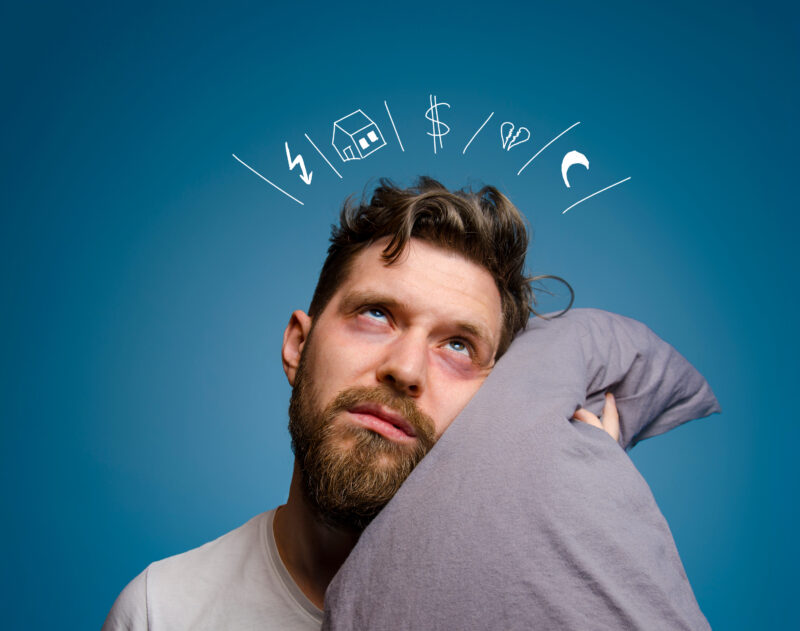
We’ve all had nights where we can’t fall asleep. We may go to bed feeling tired after a busy day; but for some reason, sleep eludes us, and by the morning we’re exhausted and out-of-sorts. When insomnia becomes a nightly event, everyday life can feel like really hard work.
Find out more about Hypnotherapy for anxiety here. I am also currently offering a free initial consultation you can book here.
There are many reasons why sleep can be elusive, from churning over worries to eating spicy food before bedtime. It could be that you have a tendency to “ruminate”, which is often called “overthinking”. This results in sleepless nights as you both worry excessively over past events and negatively forecast the future.
I’m writing this during the Covid 19 pandemic, which has seen a rise in anxiety as most of us have concerns about our health, families and incomes. Even nature’s non-worriers may be finding it harder to switch off. And of course, many of us are simply burning off less energy during the day, making us less physically tired at bedtime.
The good news is that whatever the cause of your insomnia, whether it’s unhelpful habits or an underlying anxiety, there are ways to help you regain a healthy sleep pattern.
Why is sleep so important?
When our wise mums told us that we’d “feel better after a good night’s sleep”, their psychology was spot-on. About 20% of our sleep is REM (rapid eye movement) sleep, which occurs in several bursts throughout the night. During this phase, our brains process the events and the emotions of the day. The brain makes sense of them by moving them from the primitive to the intellectual side of the brain, from short-term to long-term memory.
Because of this, we’re better able to deal with our emotions, even negative ones, as the REM brain converts them into a controllable narrative. This is our brain’s way of emptying our stress buckets and it works a treat. We all have a stress bucket, where we store our negative thoughts and worries. Quality REM sleep acts like a beaker, bailing it out overnight.
However, this is a really cruel double-whammy for anxiety sufferers, as they often struggle to sleep. By missing out on crucial REM sleep, stress buckets aren’t emptied during the brain’s nightly reboot, resulting in a vicious circle of anxiety – poor sleep – increased anxiety.
What can I do to help me sleep?
Firstly, don’t feel pressured to get to sleep – that’s never going to be effective. There are some really simple adjustments you can make to help you drift off.
There are plenty of tried-and-tested sleep remedies. Try a relaxing bath, lavender oil and a warm (sugar, caffeine and alcohol-free) drink at bedtime, following a day that’s included fresh air and exercise. These all have some benefit, along with removing unhelpful elements such as screens, bright lights and late-night snacks. Pets can help or hinder, depending on the pet.
Think about your bedroom. You don’t have to go the full feng shui; however, a good declutter leads to a calmer space. Make sure your pillows and mattress are in good condition; and newly washed bed linen creates a real sense of clean comfort. If you can, fitting blackout blinds or curtains can help establish a year-round routine.
And thinking about routine – don’t dismiss it as a toddler sleep technique. There’s a lot to be said for establishing a regular ritual that will help your body find its own sleep pattern. Don’t be tempted to “catch up” with a weekly sleep-binge – this won’t help as much as working towards a regular routine will.
If you have a worry, don’t push it away. Acknowledge it, and file it for the daytime. The anxious brain is notoriously unhelpful at doing this, so you may need to do some admin for it. Write down your worry before bed, along with any potential solutions, and park it until the morning.
Can hypnotherapy help me get to sleep?
All these tips and techniques are known for being soporific. However, what we sometimes see as insomnia actually has its roots in anxiety.
If your sleeplessness is due to anxiety, you may need extra support to overcome your wakefulness. Hypnotherapy for insomnia looks at your concerns, and helps you come up with a pathway to overcome them. Solution focused hypnotherapy, with its focus on a positive future, can help break that vicious cycle of anxiety – insomnia – anxiety by replacing night time worries with achievable, positive goals.
Hypnotherapy for Insomnia
If you’re having trouble sleeping, please contact me for a confidential chat. We can work together to re-establish good sleeping patterns and to get that stress bucket emptying itself again.
Please note: wakefulness due to snoring could be a symptom of sleep apnoea and you’ll need to speak with your GP. Likewise, seek advice if you need the loo more often at night.